
Water Rescue Wet-Style Life Jackets: Key Advantages for Professional Rescue Teams
2026-11-16
When the water turns violent, every gram of gear on a rescuer's body earns its place—or gets left behind. Professional rescue teams are increasingly ditching bulky, oversized PFDs for something leaner: wet-style life jackets. The reason isn't fashion; it's physics. Buoyancy that moves with the body, faster donning, and zero snag points in debris-heavy currents change what a rescuer can actually do. In this post, we'll unpack those concrete advantages—and why Jianghe Flood Prevention considers them non-negotiable for modern flood response.
Mobility First: Wet-Style Cuts That Let Rescuers Swim Unhindered
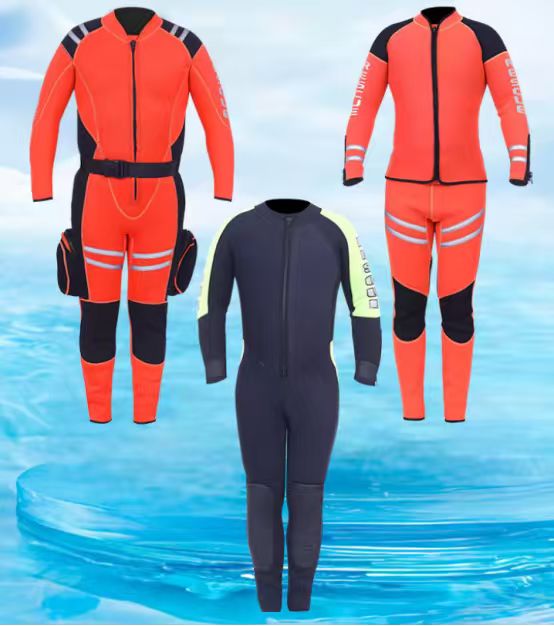
Rescue swimmers don't have the luxury of pausing mid-stroke to adjust a twisted suit or fight a stiff shoulder seam. Wet-style cuts address this by stripping back material where it matters most: under the arms, across the lats, and along the inner thigh. The result is a lower-profile fit that moves with the body rather than against it, letting a rescuer reach, kick, and rotate without that telltale pinch of neoprene or binding fabric.
What separates these cuts from standard swimwear is the deliberate absence of excess. Seams are placed away from high-friction zones, leg openings sit higher to prevent restriction during a powerful frog kick, and panels are bonded rather than stitched in critical areas to eliminate chafe. Even when saturated, the suit doesn't sag or balloon; water drains quickly through laser-cut perforations at the lower back, so a rescuer climbing onto a deck or boat isn't hauling extra weight.
In practice, that translates to faster entries, cleaner underwater pulls, and less energy spent fighting gear. Whether it's a beach patrol guard diving through shore break or a swiftwater technician crossing a current, the cut's mobility-first approach means every motion counts. Rescuers can focus on the person in the water, not on what they're wearing.
Snag-Free Design for Fast Entries in Tight or Debris-Filled Water
Most lures fail the moment they meet a submerged branch or a wad of old line. This body shape starts with a low-profile back and tucks the hook points behind a flexible baitfish-style collar, so the whole thing slips through brush, stumps, and floating weed mats without catching. The nose is tapered just enough to punch into tight gaps, while the belly weight keeps the hook riding upright and ready.
Beyond the obvious weedless guard, the line tie sits flush against the head instead of poking out like a snag magnet. That small change means you can fire a cast straight into laydowns or flooded grass without the knot grabbing trash on the drop. When you do connect with cover, a quick twitch frees the bait rather than burying it deeper, so you spend more time fishing and less time breaking off.
Buoyancy That Keeps You Stable Without Fighting Your Stroke
Most swimmers know the feeling of sinking hips and a constant battle to keep the legs up. That struggle quietly drains energy and ruins the rhythm you're trying to build. The right buoyancy shifts the dynamic entirely. Instead of kicking harder just to stay level, your lower body floats naturally, and every stroke moves you forward rather than merely keeping you afloat. The water supports you from underneath, so your shoulders relax and your arms can focus on a clean, unhurried pull.
This kind of support doesn't mean you're cheating. Think of it as removing a distraction. When your body sits higher in the water, you're no longer compressing your chest to compensate or paddling with your head lifted just to breathe. The added lift lets you keep a longer, smoother line from fingertips to toes. A stable position becomes effortless, so you can finally pay attention to timing, rotation, and the subtle catch that makes each length feel surprisingly easy.
The best part is that this stability doesn't fight you when you change pace or flip turn. Because the lift is distributed evenly, there's no awkward bob or sudden sink when you pause. You can glide a little longer between strokes, enjoy a relaxed exhale underwater, and come out of each turn with your body already aligned. The sensation is closer to swimming downhill than dragging yourself across the pool.
Shell Materials That Take a Beating From Rocks and Gear
A shell that meets rock and gear abuse rarely survives on a single trick. It leans on layered thinking: a stiff outer skin like polycarbonate shrugs off sharp impacts, while a softer inner skeleton of TPU or rubber absorbs the vibration before it reaches what matters. The trick isn't just hardness—it's how the material yields just enough to avoid cracking, then snaps back. Some designs add a textured ridge pattern that acts as a sacrificial bumper, letting scrapes and gouges accumulate on raised points instead of chewing through the flat faces.
Metal gets plenty of talk, but stamped aluminum shells tend to dent and transfer shock straight through. A well-chosen composite beats raw strength: glass-filled nylon holds its shape under repeated gear-tooth pressure, and it doesn't ring like a bell when a rock hits. In places where abrasion is constant, an overmolded edge of high-durometer elastomer works like a tire tread, spreading the wear across a replaceable zone. That way the core shell stays intact while the sacrificial layer takes the daily grind.
Field repairs favor materials that don't require heat or special tools. A shell made from ultra-high-molecular-weight polyethylene can be drilled, filed, and reshaped with basic gear, and it slides against rock instead of catching. It won't win a beauty contest, but after a season of gear clatter and scree, it still holds its dimensions. That's the quiet hallmark of a shell built for punishment—not just surviving one hit, but staying straight and functional after a thousand small ones.
Rapid Drainage So the Vest Doesn't Weigh You Down After a Rescue
Waterlogged gear turns a manageable situation into a struggle. That's why this vest channels every drop out through oversized mesh panels and angled drain ports the moment you clear the waterline. No pooling in the lower back, no sloshing with each step back to the truck.
The shell fabric itself resists saturation, so even the outer layer sheds moisture instead of holding it. After a swift-water rescue or a long tow back to shore, the vest stays light enough to forget you're wearing it.
Compare that to foam vests that absorb like a sponge. You'll feel the difference when you climb a ladder or haul gear—dry weight means less fatigue and faster recovery for the next call.
Harness-Friendly Attachment Points for Tethered Operations
Working at height rarely leaves room for awkward fumbling. When a harness includes attachment points that have been shaped and positioned with tethered tool use in mind, the difference is immediate. Instead of forcing a carabiner through a stiff webbing loop or searching for a D-ring buried under layers, you find small reinforced openings placed where your hand naturally falls. These points are often subtly angled or recessed so that a tether clip slides in without snagging, even while you're leaning against a beam or reaching overhead. The result is less time spent on gear management and more attention on the task itself.
Beyond convenience, harness-friendly attachment points reduce the risk of accidental drops. A poorly located ring encourages users to tie off tools to shoulder straps or waist belts, creating tangles or weak connections. When the harness itself offers sturdy, low-profile anchors, workers are more likely to clip tethers correctly every time. Some designs incorporate a small keeper loop that holds the tether close to the body when not in use, preventing it from swinging into rotating equipment or catching on ladder rungs. This kind of thoughtful detailing turns a standard safety component into a quiet work partner.
In practice, the best attachment points are those you stop noticing after the first hour. They don't dig into the ribs when you bend, they don't interfere with tool pouches, and they hold firm under sudden loads without deforming. Field feedback from rope access technicians and tower climbers often highlights specific harnesses simply because the tether connection feels natural, almost like putting a tool back into its holster. That sense of effortlessness is what separates a generic harness from one that genuinely supports tethered operations day after day.
FAQ
Wet-style life jackets are cut closer to the body and often lack bulky foam panels, so they don't snag on ropes or boat fittings. Instead of relying on a single large air chamber, they distribute flotation in a way that lets rescuers swim hard, climb ladders, and move through breaking water without the jacket riding up.
Inflatable PFDs need time to deploy and can fail if punctured by debris. Wet-style jackets provide immediate, inherent buoyancy the moment a rescuer hits the water, and they protect the torso from impacts against rocks or hulls. That reliability matters when you're already in the hazard zone.
They offer a low-profile fit that keeps arms free for throwing bags and handling victims, plus multiple attachment points for tethers and knives. The foam placement is tuned for a heads-up floating position even in aerated water, and the outer shell resists abrasion from repeated contact with rough surfaces.
Instead of large rectangular panels, wet-style jackets use segmented foam that moves with the torso. Shoulder straps are often minimal or adjustable, and side panels are cut high so a rescuer can bend, twist, and lift a victim without the jacket bunching under the arms.
Teams should check for quick-release buckles, a strong rescue belt or harness that doesn't interfere with swimming, durable outer fabric rated for high abrasion, and enough reflective material to stay visible at night. Fit is critical: the jacket must stay in place during a live-bait rescue or when being pulled by a line.
They perform best in swiftwater, flood, and surf conditions where debris and turbulence are common. For prolonged offshore operations, some teams pair them with a dry suit and add a separate flotation collar, but the wet-style jacket remains the primary buoyancy layer because it won't shift or deflate.
Conclusion
Professional rescue teams rarely get to choose their entry point. A wet-style life jacket that prioritizes mobility lets rescuers swim through tight passages or debris-choked water without fighting their gear. The cut of these vests—often contoured and low-profile—keeps the arms free for full strokes, while snag-free panels eliminate loops or straps that could catch on branches or twisted metal. When seconds count, that clean profile means the difference between a smooth dive and a tangle that costs precious time. It's not just about comfort; it's about moving like you're not wearing a vest at all.
Buoyancy is fine-tuned to keep the torso stable without forcing the wearer onto their back, so every stroke feels natural during a rapid approach. The outer shell shrugs off scrapes from rocks, boat edges, and rescue gear—no fraying or tearing after a hard season. After pulling someone from the water, the vest drains fast; no sloshing weight dragging you down as you climb back aboard. And for teams working tethered lines, integrated attachment points sit flush, accepting carabiners without adding bulk or catching on ropes. These jackets aren't just worn—they're worked, and they hold up.
Contact Us
Contact Person: Kristin Zhang
Email: [email protected]
Tel/WhatsApp: +8615366239752
Website: https://www.jianghecn.com/