

How Does Seawater Affect the Performance of Marine Firefighting Foam Concentrate During Fire Suppression
2026-04-16
When fighting fires at sea, the interaction between Marine Firefighting Foam Concentrate and seawater is a critical factor that determines success or failure. Plent has analyzed this dynamic to help vessel operators and port authorities make informed decisions. Seawater introduces unique challenges due to its salinity, mineral content, and biological impurities, all of which can alter foam expansion, drainage time, and extinguishing efficacy.
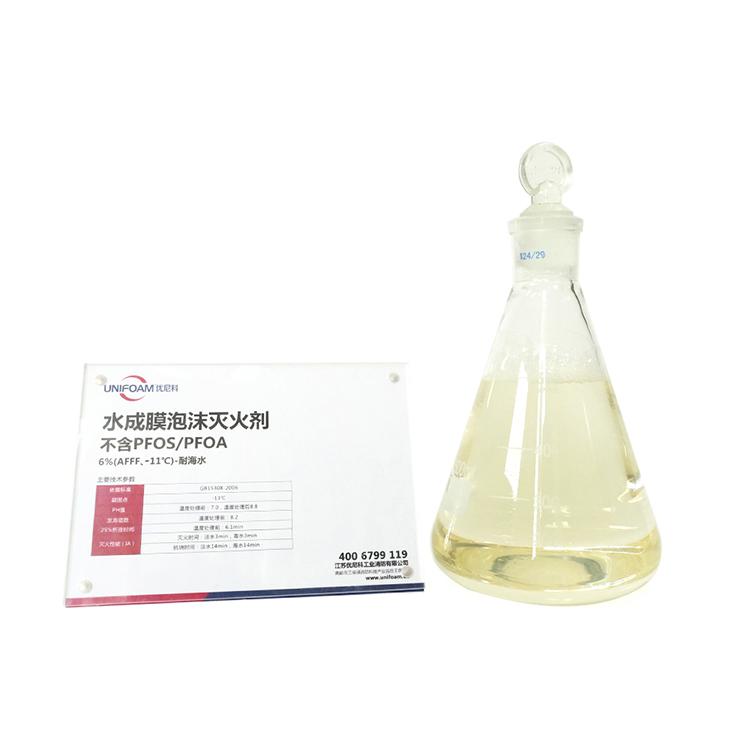
Key Effects of Seawater on Foam Performance
| Factor | Effect on Foam | Mitigation Strategy |
|---|---|---|
| High salinity | Reduces foam expansion ratio and stability | Use saltwater-compatible Marine Firefighting Foam Concentrate |
| Magnesium/calcium ions | Causes precipitate formation, clogging nozzles | Pre-mix with fresh water when possible |
| Temperature variation | Alters viscosity and flow rate | Store concentrate in climate-controlled lockers |
| Biological matter | Degrades foam structure over time | Regular system flushing and quality testing |
Performance Comparison: Seawater vs. Freshwater
| Parameter | Freshwater | Seawater | Recommended Product by Plent |
|---|---|---|---|
| Expansion ratio (typical) | 8:1 to 12:1 | 5:1 to 8:1 | Plent SeaGuard X3 |
| Drain time (25%) | 4–6 minutes | 2–3 minutes | Plent Marine Fluorine-Free |
| Corrosion potential | Low | High | Plent Corrosion-Shield Series |
Using Marine Firefighting Foam Concentrate with seawater without proper formulation leads to rapid foam collapse. Plent engineers its concentrates with chelating agents and salt-tolerant surfactants to maintain performance even under harsh marine conditions.
How to Optimize Foam Performance with Seawater
-
Always verify that your Marine Firefighting Foam Concentrate is certified for seawater use
-
Install inline mixing systems calibrated for salinity levels
-
Conduct quarterly tests using actual seawater samples
-
Partner with Plent for custom formulation based on your operating waters
Marine Firefighting Foam Concentrate FAQ Common Questions
Q1: Can standard firefighting foam concentrate be mixed with seawater for marine fire suppression?
A1: Most standard foam concentrates are formulated for freshwater and will lose 40–60% of their expansion efficiency when mixed with seawater. The high salt concentration disrupts the surfactant film, causing rapid bubble coalescence and drainage. Plent recommends using only Marine Firefighting Foam Concentrate specifically designed with salt-tolerant polymers. These formulations maintain expansion ratios above 7:1 even in full-strength seawater, ensuring adequate blanketing and cooling for Class B fuel fires.
Q2: How does seawater temperature affect the proportioning ratio of Marine Firefighting Foam Concentrate?
A2: Seawater temperature directly impacts viscosity and flow dynamics. Cold seawater (below 10°C/50°F) increases concentrate viscosity, potentially reducing pickup rates in bladder tanks and proportioners. Warm seawater (above 30°C/86°F) accelerates biological degradation and reduces foam stability. Plent provides temperature-adjusted proportioning charts for each product batch. A general rule: for every 5°C drop below 20°C, increase concentrate percentage by 0.5% to maintain effective coverage. Always calibrate your proportioning system seasonally.
Q3: Does prolonged exposure to seawater degrade Marine Firefighting Foam Concentrate stored onboard?
A3: Yes, if contamination occurs. Seawater intrusion into storage tanks or drums triggers hydrolysis of key surfactants and promotes microbial growth. Within 30 days of contamination, foam expansion can drop by 70%. Plent offers sealed, corrosion-resistant IBC containers with integrated moisture indicators. Regular sampling using portable refractometers can detect early salinity changes. Storage best practices: keep concentrate in dedicated lockers away from seawater piping, inspect seals monthly, and replace any batch showing conductivity above 4,000 µS/cm.
Final Thoughts
Understanding how seawater affects Marine Firefighting Foam Concentrate is essential for vessel safety and regulatory compliance. Plent continues to lead innovation in saltwater-compatible foams, offering products that meet IMO MSC.1/Circ.1312 standards.
Contact us today for a free seawater compatibility assessment of your current foam systems and to request samples of Plent marine-grade concentrates tailored to your fleet’s operating environment.