
How Far Can a Remote Control Portable Fire Monitor Accurately Project Water or Foam from a Safe Distance
2026-04-21
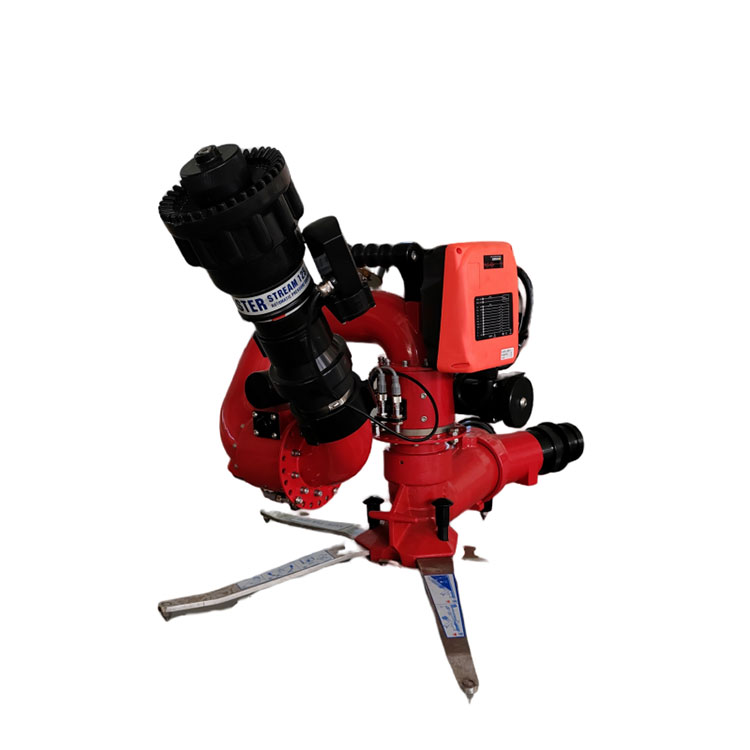
When fighting industrial fires or hazardous material blazes, the Remote Control Portable Fire Monitor becomes an essential tool. Operators often ask: what is the effective range of such a device from a safe operating distance? For the Plent Remote Control Portable Fire Monitor, the answer depends on pump pressure, nozzle type, and environmental factors. Typically, a high-performance unit accurately projects water or foam between 60 and 100 meters (197 to 328 feet) at 8–10 bar pressure. Under optimal conditions with specialized nozzles, ranges can extend to 120 meters. This balance between reach and precision allows firefighters to stay well outside the danger zone while delivering suppression agents exactly where needed.
Key Factors Influencing Accurate Projection Distance
| Parameter | Typical Value for Plent Units | Impact on Accuracy |
|---|---|---|
| Operating Pressure | 6 – 12 bar | Higher pressure increases range but may reduce stream coherence |
| Nozzle Type | Adjustable combination nozzle | Allows switching between straight jet (distance) and fog (heat shielding) |
| Flow Rate | 800 – 2400 L/min | Higher flow generally extends reach |
| Wind Speed | < 15 km/h ideal | Crosswinds above 20 km/h reduce effective accuracy by 30–40% |
| Monitor Elevation | 1.5 – 3 m above ground | Every 1 m height adds approx. 5–8 m range |
Why Safe Distance Matters
The Remote Control Portable Fire Monitor enables operation from up to 200 meters away via wireless remote. This keeps personnel clear of radiant heat, toxic smoke, and potential explosions. Plent models integrate failsafe communication protocols, ensuring the monitor holds its last position if signal is lost – a critical safety feature.
FAQ: Remote Control Portable Fire Monitor Common Questions
Question 1: Can the Remote Control Portable Fire Monitor maintain accuracy on uneven terrain such as rubble or sloped ground
Answer: Yes. Plent monitors feature a low center of gravity and wide‑base stabilizers. The self‑adjusting base compensates for slopes up to 15 degrees. For steeper angles, manual leg extensions provide stability. Accuracy remains within ±5% of target distance even on loose surfaces, as the monitor’s oscillation mechanism automatically corrects for minor tilts.
Question 2: Does foam projection distance differ significantly from water projection in a Remote Control Portable Fire Monitor
Answer: Foam projection distance is typically 15–25% shorter than water at the same pressure and flow rate due to foam’s lower density and higher expansion ratio. For a Plent unit projecting water to 100 meters, foam reaches approximately 75–85 meters. To compensate, operators can increase pressure within safe limits (max 12 bar) or use low‑expansion foam nozzles designed to maintain stream cohesion. Plent includes a foam‑calibrated mode in its remote interface.
Question 3: How does battery life affect the remote operation range and accuracy of a Remote Control Portable Fire Monitor
Answer: Battery depletion does not reduce projection distance or stream accuracy directly. However, low battery may weaken radio signal strength, reducing effective remote control distance from 200 meters to as little as 50 meters. Plent systems provide audible and visual warnings at 20% battery remaining. Swappable hot‑swap batteries ensure continuous operation. Accuracy of water/foam placement remains unchanged because hydraulic functions are mechanically independent of the remote battery.
Best Practices for Maximizing Reach
-
Position the Remote Control Portable Fire Monitor upwind and on firm ground.
-
Use straight‑jet nozzles for maximum distance; switch to fog pattern only for heat shielding.
-
For foam applications, select medium‑expansion nozzles (expansion ratio 20:1) to balance range and blanket effect.
-
Plent recommends testing actual throw distance annually with flow meters and target boards.
Contact Us
Ready to enhance your fire response capability with a Remote Control Portable Fire Monitor that combines safe distance, pinpoint accuracy, and rugged reliability Contact Plent today for technical specifications, on‑site demos, or a customized quotation. Our engineering team provides 24/7 support and global delivery.