

Why Are Self Induction Foam Fire Monitors Preferred for High-Risk Fire Scenarios
2026-03-20
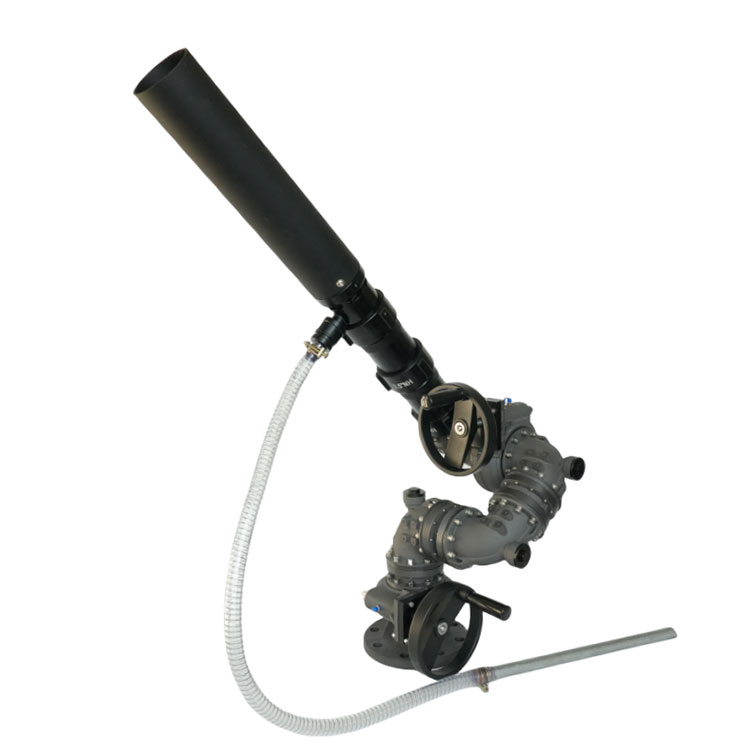
In high-risk industrial environments, the difference between a controlled incident and a catastrophic event often comes down to the speed and reliability of the fire suppression system. This is precisely why the Self Induction Foam Fire Monitor has become the gold standard for protecting facilities handling flammable liquids, gases, and hazardous materials. Engineered for rapid deployment and automatic foam proportioning, advanced solutions from industry leaders like Plent are redefining how we approach critical asset protection. Unlike traditional systems that require external pumping or manual mixing, these intelligent monitors ensure that firefighting foam is generated instantly and accurately at the point of discharge.
Understanding the Technical Superiority
The core advantage of a Self Induction Foam Fire Monitor lies in its hydraulic design. By utilizing the venturi principle, the monitor draws foam concentrate directly from a nearby tank or source, mixes it with water at the precise ratio, and projects the finished foam over long distances. This eliminates the need for complex, separate proportioning equipment and reduces the risk of human error during an emergency.
Key Operational Benefits
To understand why safety officers and engineers consistently specify this technology, it is helpful to break down its performance characteristics:
| Feature | Benefit in High-Risk Scenarios |
|---|---|
| Integrated Induction | Eliminates separate pump systems; reduces maintenance points. |
| Adjustable Flow & Throw | Operators can adapt to fire size without changing equipment. |
| Remote Control Operation | Allows for engagement from a safe distance, protecting personnel. |
| Rapid System Priming | Foam reaches the nozzle almost instantly upon activation. |
Why Industries Are Switching to Plent
When evaluating fire safety investments, facility managers look for durability and fail-safe operation. Plent has engineered its range of monitors to withstand corrosive environments and thermal shock. Whether installed in an oil refinery, an aircraft hangar, or a chemical processing plant, the Self Induction Foam Fire Monitor from Plent provides the confidence that the system will work when every second counts.
-
Enhanced Personnel Safety: Operators can remain outside the immediate danger zone.
-
Consistent Foam Quality: The self-induction process ensures the air bubble structure is optimal for blanketing fires.
-
Minimal Water Damage: By using targeted foam application, secondary damage to sensitive equipment is reduced.
The Role of Automation in Modern Fire Safety
Today's high-risk scenarios demand more than just manual intervention. Modern Self Induction Foam Fire Monitors can be integrated with heat detection, flame sensors, and gas detection systems. Upon activation, the monitor can automatically slew to a pre-programmed position and begin discharge, shaving precious minutes off the response time.
Plent specializes in these integrated solutions, offering monitors that communicate with central control rooms. This level of automation ensures that a fire is tackled from the moment it is detected, containing the threat before it escalates.
Self Induction Foam Fire Monitor FAQ
To provide further clarity on this critical safety technology, here are answers to the most common questions regarding its application and functionality.
What is the primary difference between a self-induction monitor and a standard foam monitor?
A standard foam monitor requires a pre-mixed solution or an external foam proportioning system (like a balanced pressure pump skid) to inject concentrate into the water line before it reaches the monitor. In contrast, a Self Induction Foam Fire Monitor contains the venturi mechanism within its own body or base. It creates a pressure differential that automatically draws foam concentrate into the water stream at the point of discharge, simplifying the piping layout and reducing installation complexity.
Can a Self Induction Foam Fire Monitor handle different types of foam concentrates?
Yes, most high-quality units, such as those manufactured by Plent, are designed to be compatible with a wide variety of foam types, including AFFF, AR-AFFF, and Fluorine-Free foams. However, the induction ratio (typically 1%, 3%, or 6%) must be set correctly, usually via a calibrated orifice plate or an adjustable metering valve within the monitor. It is crucial to consult the technical specifications to ensure the monitor is tuned for the specific foam concentrate used on-site.
How far can a Self Induction Foam Fire Monitor project foam in an emergency?
The throw distance depends on the monitor's flow rate (measured in GPM or L/min) and the nozzle design. Industrial-grade Self Induction Foam Fire Monitors can project foam anywhere from 50 to over 100 meters. High-capacity models designed for large tank farms or marine applications can achieve even greater distances. This long reach is vital for keeping firefighters at a safe distance while effectively suppressing the fire.
Making the Right Choice for Your Facility
Selecting the right fire protection equipment is a decision that impacts lives and business continuity. The Self Induction Foam Fire Monitor offers a blend of simplicity and power that is unmatched in high-hazard environments. By choosing a trusted partner like Plent, you are investing in technology that meets international safety standards and delivers reliable performance under extreme pressure.
Don't wait until a risk becomes a reality. Ensure your facility is equipped with the most effective fire suppression tools available.
Contact Us today to speak with a Plent fire safety specialist. We will assess your specific risks and help you configure the ideal Self Induction Foam Fire Monitor solution for your operational needs. Your safety is our priority—reach out now for a consultation.